Most OOH tells you where an audience might be. Our first-party data helps us understand who is actually there, when they’re there and why.
In DOOH, location matters. But understanding the audience behind that location matters more.
For advertisers, the key isn’t simply knowing how many people pass a digital display. It’s understanding who those people are, when they’re there and why they’re there.
Because footfall alone only tells you so much.
A screen might sit in front of thousands of people every week, but without understanding the behaviour behind that audience, there’s still an element of guesswork. When do particular audiences visit? What brings them into that environment? How does the audience change throughout the day? And when is the most relevant moment for a brand to reach them?
At Lovitlocal, we’re working to answer those questions.
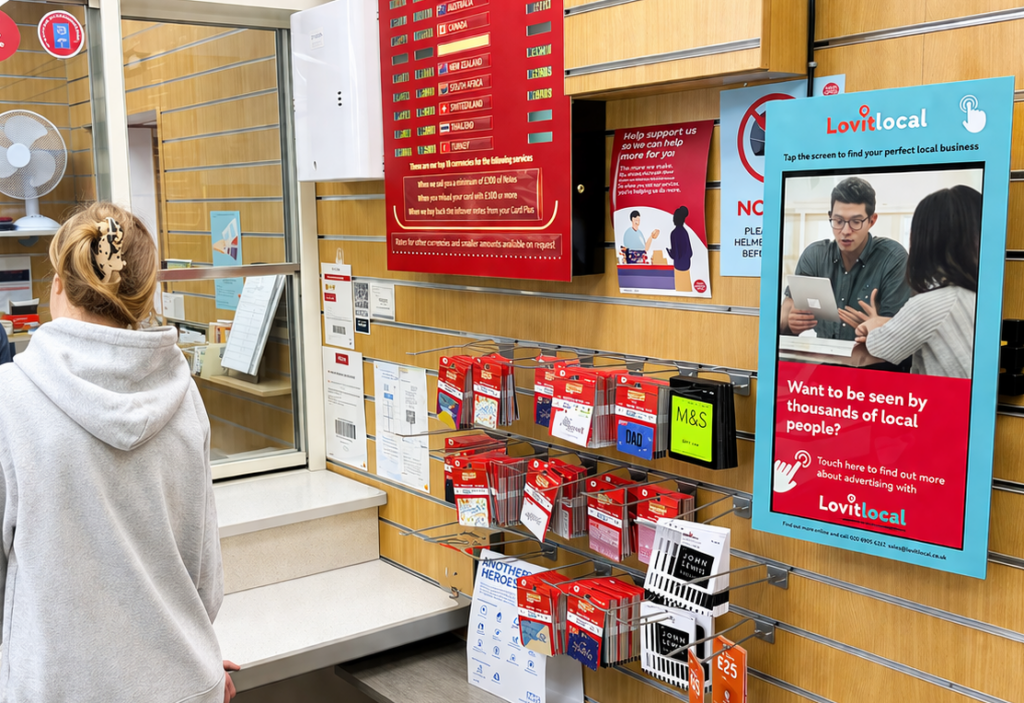
We operate a growing network of digital advertising displays inside Post Offices and convenience stores across the UK, reaching more than 2 million high street visitors every month.
Alongside that network, we’re building a proprietary layer of first-party audience data gathered directly from our postmasters, the people who understand these locations and their customers better than anyone.
They know the daily rhythm of their stores. They know when local business owners and tradespeople tend to visit, when parcel collections and returns peak, when customers are accessing banking and cash services, and how those patterns change throughout the day and week.
By turning that first-hand knowledge into structured audience intelligence, we’re building a much clearer picture of the people being reached by our digital displays. Not just where an audience might be, but who is actually there, when they’re there and why.
Going beyond footfall
Footfall is an important metric in DOOH. But a number alone doesn’t tell you much about the people behind it. Two locations could generate similar monthly footfall while attracting very different audiences, at different times, for very different reasons. That distinction matters.
Post Offices in particular serve a wide range of everyday needs. A customer could be collecting or returning an online order, accessing banking or cash services, sending business post, dealing with a parcel or simply using the wider convenience store.
Our digital displays sit within these queue-based, counter-service environments, where customers spend an average of around three minutes. So rather than simply understanding how many people enter a location, we want to understand the makeup and behaviour of that audience while they’re there.
Turning audience insight into smarter DOOH
The value of that data isn’t simply knowing more about an audience. It’s being able to use those insights to make better campaign decisions. Understanding who, when and why can help advertisers identify the locations and periods that are most relevant to the audiences they want to reach.
A campaign targeting SME owners and tradespeople, for example, could focus on locations and times where those audiences are particularly prominent. A brand looking to reach younger e-commerce consumers could identify environments where parcel collections and returns form a significant part of customer behaviour.
Combined with our DOOH ad-serving infrastructure, these insights create opportunities for more intelligent campaign delivery, from selecting the right locations to tactical day-parting and changing creative throughout a campaign.
It brings together the three things we believe are key to building a smarter DOOH network: the right digital displays, a deeper understanding of the audience and the technology to act on that insight.
For us, the future of DOOH isn’t simply about adding more screens. It’s about understanding the audiences in front of them.